The Osmo Accessories for Kids' Tablets review centers on Pizza Co., a hands-on game that turns a tablet into a pretend pizza shop where children handle orders, toppings, and money.
Osmo Pizza Review Summary
The quick verdict
7,000+ ratings
Read Amazon ReviewsOsmo Pizza Co.
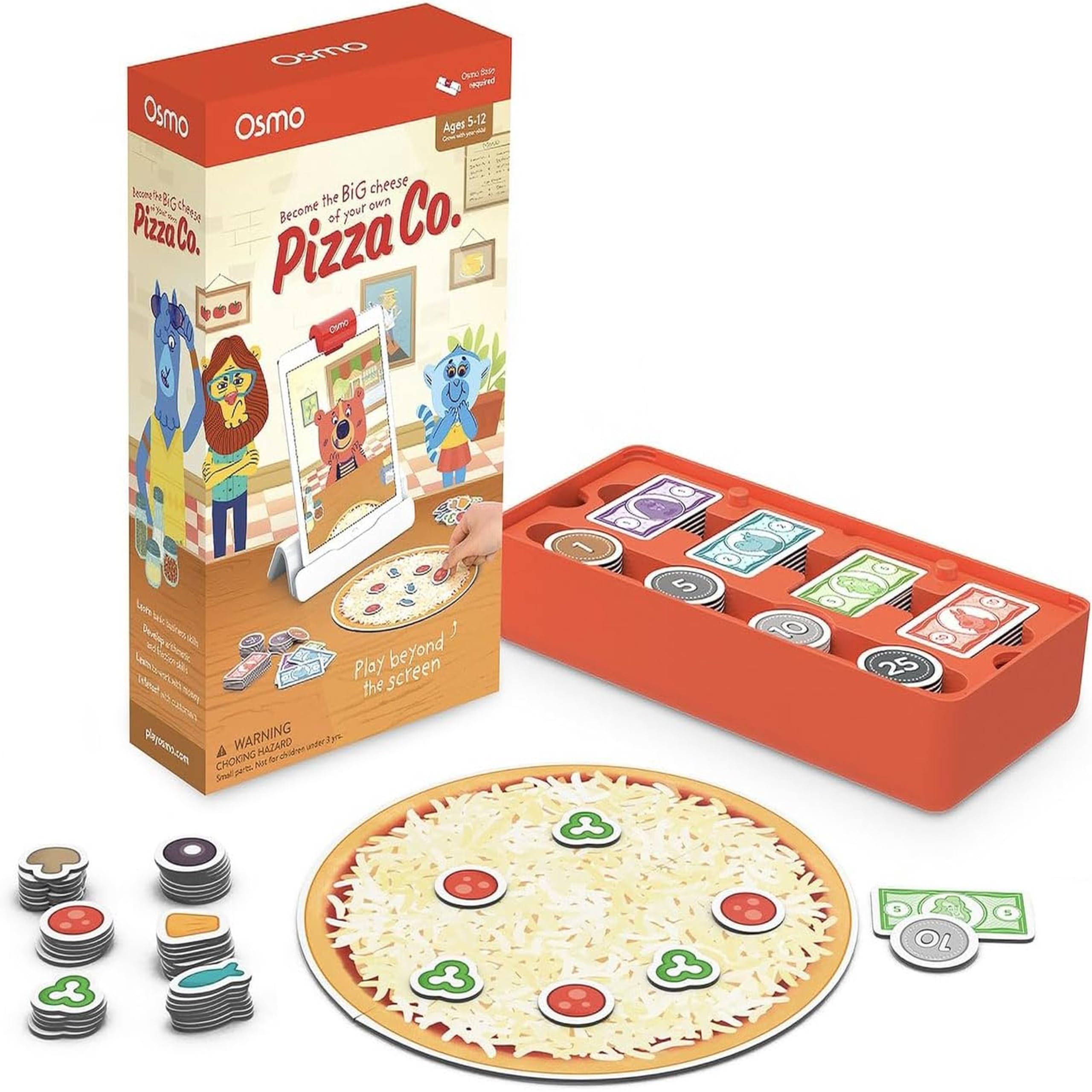
A tablet-based pizza shop game for children ready to practice arithmetic, money skills, and customer interaction through hands-on play.
- Children take orders, assemble pizzas with physical toppings, collect payment, and make change using money tiles.
- The tablet camera reads physical actions during play, linking the hands-on pieces with the game.
- Described math activities include addition, subtraction, fractions, mental math, and profit-and-loss decisions.
- Customer interactions involve listening to orders and responding to preferences.

Pros
- Combines pretend-shop play with practical arithmetic and money handling.
- Physical toppings and money tiles give children something to manipulate as they play.
Consider before buying
- Play depends on a compatible tablet, so buyers need to check their exact model and operating system first.
- The many named tablet generations make compatibility worth checking carefully before purchase.
Read the full review summary
Pizza Co. gives arithmetic a practical context: children assemble pizzas from physical toppings, take customer orders, and use money tiles to collect payment and make change.
The game is designed to progress from simple addition and money identification toward fractions, faster mental math, and profit-and-loss decisions.
Its strongest fit is a child who enjoys imaginative role-play and is ready to practice number skills while responding to customers.
The product description covers ages 5 through 12 and says the challenge adapts as skills grow; buyers should confirm that their specific iPad or Fire tablet model and operating system are supported before choosing it.
The buying factors
Osmo Pizza Scorecard
Editorial scores reflect listed features and buyer fit; they are not laboratory measurements or customer ratings.
Hands-on interaction
Physical toppings and money tiles make the shop tasks active and concrete.
Math practice
The described activities span arithmetic, money, fractions, mental math, and business decisions.
Role-play appeal
Running a pizza shop gives number practice a clear imaginative setting.
Skill progression
The game is described as adapting from beginner activities to more advanced calculations.
Social communication practice
Taking orders and responding to customer preferences gives children opportunities to practice listening and interaction.
Device compatibility clarity
A broad range of iPad and Fire models is listed, though buyers need to match their exact device and software.
Key Features and Specifications of Osmo Pizza
- Children take orders, assemble pizzas with physical toppings, collect payment, and make change using money tiles.
- The tablet camera reads physical actions during play, linking the hands-on pieces with the game.
- Described math activities include addition, subtraction, fractions, mental math, and profit-and-loss decisions.
- Customer interactions involve listening to orders and responding to preferences.
- The intended age range is 5 through 12, with difficulty described as scaling from beginner to advanced.
- Supported iPads are listed as running iOS 15 or later; the description names iPad, iPad Air, iPad mini, and iPad Pro generations.
- Listed Fire tablet support includes selected Fire HD 8 and Fire HD 10 generations and Fire Max 11.
Pros and Cons of Osmo Pizza
Pros
- Combines pretend-shop play with practical arithmetic and money handling.
- Physical toppings and money tiles give children something to manipulate as they play.
- The described progression can provide a path from simple number work to fractions and quicker calculations.
- Customer orders add listening and communication tasks to the math activities.
Consider before buying
- Play depends on a compatible tablet, so buyers need to check their exact model and operating system first.
- The many named tablet generations make compatibility worth checking carefully before purchase.
- Its shop role-play and math focus may not suit children who prefer open-ended creative activities or other subjects.
Who Should Buy Osmo Pizza?
Good fit
Consider Pizza Co. if a child likes pretend shops and would benefit from practicing arithmetic in a playful setting.
Taking orders, preparing pizzas, and handling payment give number work a purpose within the game, while the hands-on pieces distinguish the activity from tablet-only play.
It may also suit families looking for a game intended to grow with a child from basic addition and money identification toward fractions and mental calculations.
Before buying, compare the child’s tablet model and operating system with the supported-device list, since the experience depends on compatible hardware.
Who should skip it
Skip it if you want a tablet-independent activity or your device does not match the listed iPad or Fire tablet support.
Also consider a different kind of game if pizza-shop role-play and math practice are not a good match for the child.
How Osmo Pizza Co. turns a tablet into a math shop
Math with a practical purpose
Pizza Co. places arithmetic inside a sequence of shop tasks: understand an order, assemble the requested pizza, take payment, and make change.
That structure may help a child connect numbers with familiar transactions, while later activities are described as adding fractions, faster mental calculations, and business decisions.
A mix of physical pieces and screen play
The physical toppings and money tiles make the child’s actions part of the game, with the tablet camera reading those actions.
This design gives the activity a hands-on element, so it may appeal to children who enjoy moving pieces and seeing their choices reflected on screen.
Role-play adds a communication dimension
Customers bring listening and responding into the shop routine. Children take orders and handle preferences as part of play, pairing social interaction with the number tasks rather than treating math as a series of isolated questions.
Check the tablet before choosing
Compatibility is a practical part of the buying decision.
The described support spans several iPad families and selected Fire tablets, with iOS 15 or later specified for iPad; compare your exact model and operating system with the list before relying on the game for regular use.
Alternatives to Osmo Pizza
Accessories for Kids' Tablets alternative
2,000+ ratings
Read Amazon ReviewsOsmo Little Genius Costume Pieces and Stories
Choose Pizza Co. when the priority is math practice through pizza-shop play for a school-age child.
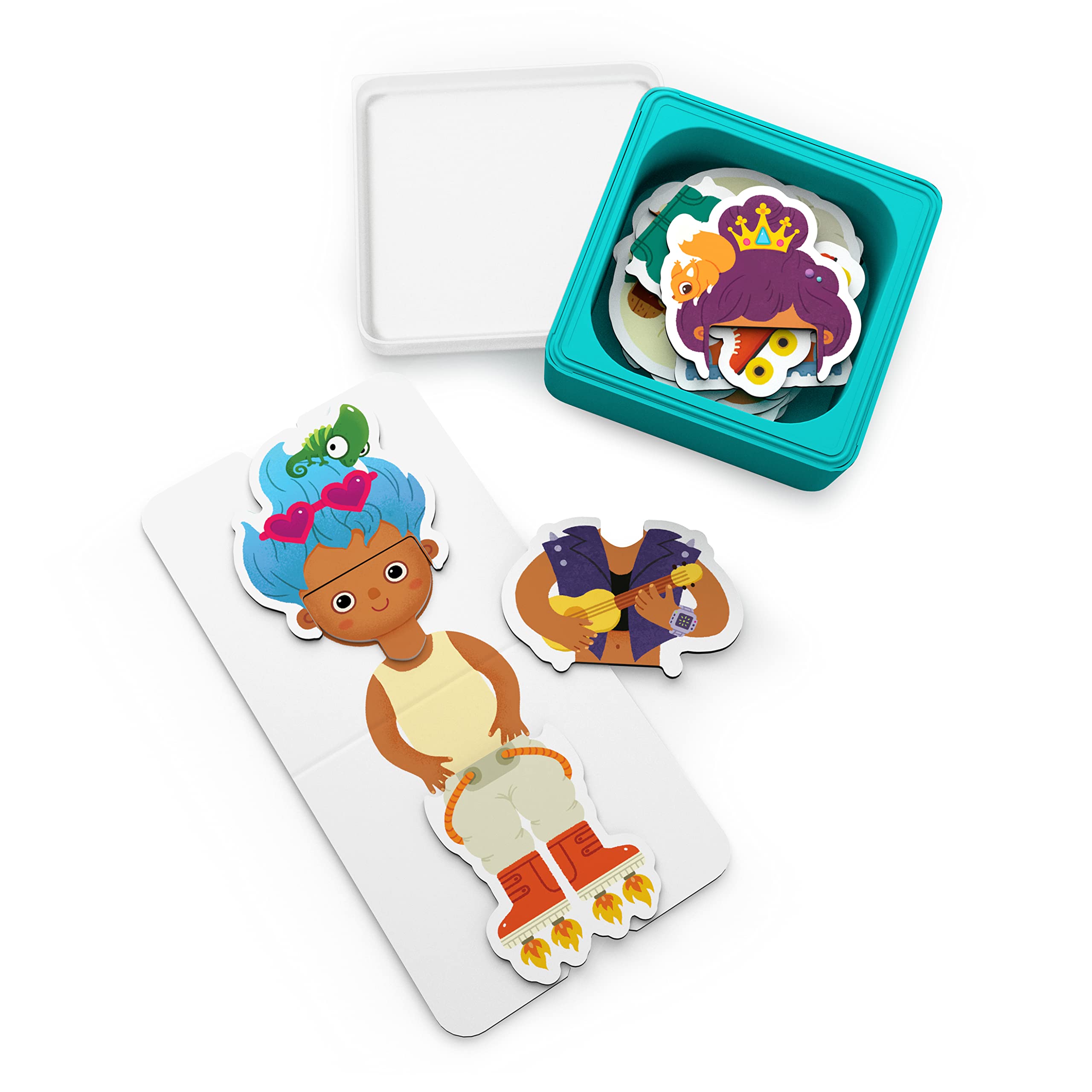
Little Genius is a closer fit for a younger child drawn to costumes and audio-led stories, provided the required base and compatible tablet are available.
- Little Genius combines costume pieces with two story-based games for younger children, ages 3 to 5+, emphasizing creativity, listening, verbal proficiency, and problem solving.
- Its description says the Osmo base and tablet are required and not included.
- Pizza Co. focuses on shop role-play, arithmetic, money handling, and customer orders, with a stated age range of 5 through 12.
Is Osmo Pizza Worth It?
Osmo Pizza Co. is worth considering for a child who enjoys pretend shop play and is ready to practice arithmetic, money skills, and customer interaction through hands-on tablet activities.
Its progression from basic number work toward fractions and mental math gives the game a useful learning arc.
Confirm tablet compatibility before buying, and choose it for its specific mix of pizza-shop role-play and math practice. If that theme or learning focus does not fit the child, a different activity will be a better match.
Your review at a glance
7,000+ ratings
Read Amazon ReviewsOsmo Pizza Co.
A tablet-based pizza shop game for children ready to practice arithmetic, money skills, and customer interaction through hands-on play.
- Children take orders, assemble pizzas with physical toppings, collect payment, and make change using money tiles.
- The tablet camera reads physical actions during play, linking the hands-on pieces with the game.
- Described math activities include addition, subtraction, fractions, mental math, and profit-and-loss decisions.
- Customer interactions involve listening to orders and responding to preferences.